SIP vs SIF: The Transition from Accumulation to Preservation


The Systematic Investment Plan, or SIP, is arguably the greatest financial invention for the Indian middle class. It forces financial discipline, uses rupee cost averaging to navigate volatility, and builds massive wealth over a 20-year horizon.
But as your wealth matures, your portfolio's architectural requirements change. A strategy designed to build wealth from zero is not the same strategy you should use to protect a Rs 50 Lakh corpus.
This is not a debate about whether SIP is better than SIF. They are two completely different tools designed for two different phases of your financial life. Let us break down exactly when to use each, and why sophisticated investors eventually need both.
Key Takeaways
- A SIP is a powerful wealth-accumulation tool, ideal for building a corpus from zero over a long time horizon.
- Standard mutual funds used in a SIP are legally restricted to long-only positions, meaning they inherit the full downside of a market crash.
- A Specialized Investment Fund (SIF) is a wealth-preservation tool designed to protect an existing Rs 10 lakh-plus corpus using derivatives and short selling.
- The math of drawdowns changes as your corpus grows. A 30 percent market crash destroys wealth much faster than a monthly SIP can recover it.
- A mature HNI portfolio uses SIPs for core long-term compounding, and SIFs as a satellite allocation to hedge downside risk.
Table of Contents
Click to Expand
The Power of the SIP (The Accumulation Phase)
If you are in your 20s or 30s and starting from scratch, the SIP is your best friend.
By investing a fixed amount every month regardless of market conditions, you buy more units when the market is low and fewer when it's high. This process, called rupee cost averaging, mathematically smooths out market volatility over a 15- to 20-year horizon.
For wealth accumulation, SIPs are flawless. You don't need to worry about short-term market crashes because your long time horizon gives the market enough room to recover and compound.
The Math of Drawdowns (The Preservation Phase)
The problem arises when you actually build that corpus. The math of drawdowns changes violently as your wealth grows.
Imagine you have accumulated a Rs 50 Lakh portfolio. The market drops 30 percent. You just lost Rs 15 Lakhs. If your monthly SIP is Rs 25,000, it will take you years of contributions just to recover the Rs 15 Lakhs you lost in two weeks.
Once your corpus is large, you no longer have a 20-year time horizon to ride out a multi-year bear market. You need institutional-grade downside protection. You transition from wealth accumulation to wealth preservation.
To understand how to size these positions, read our guide on SIF Portfolio Allocation.
SIF vs SIP: The Structural Difference
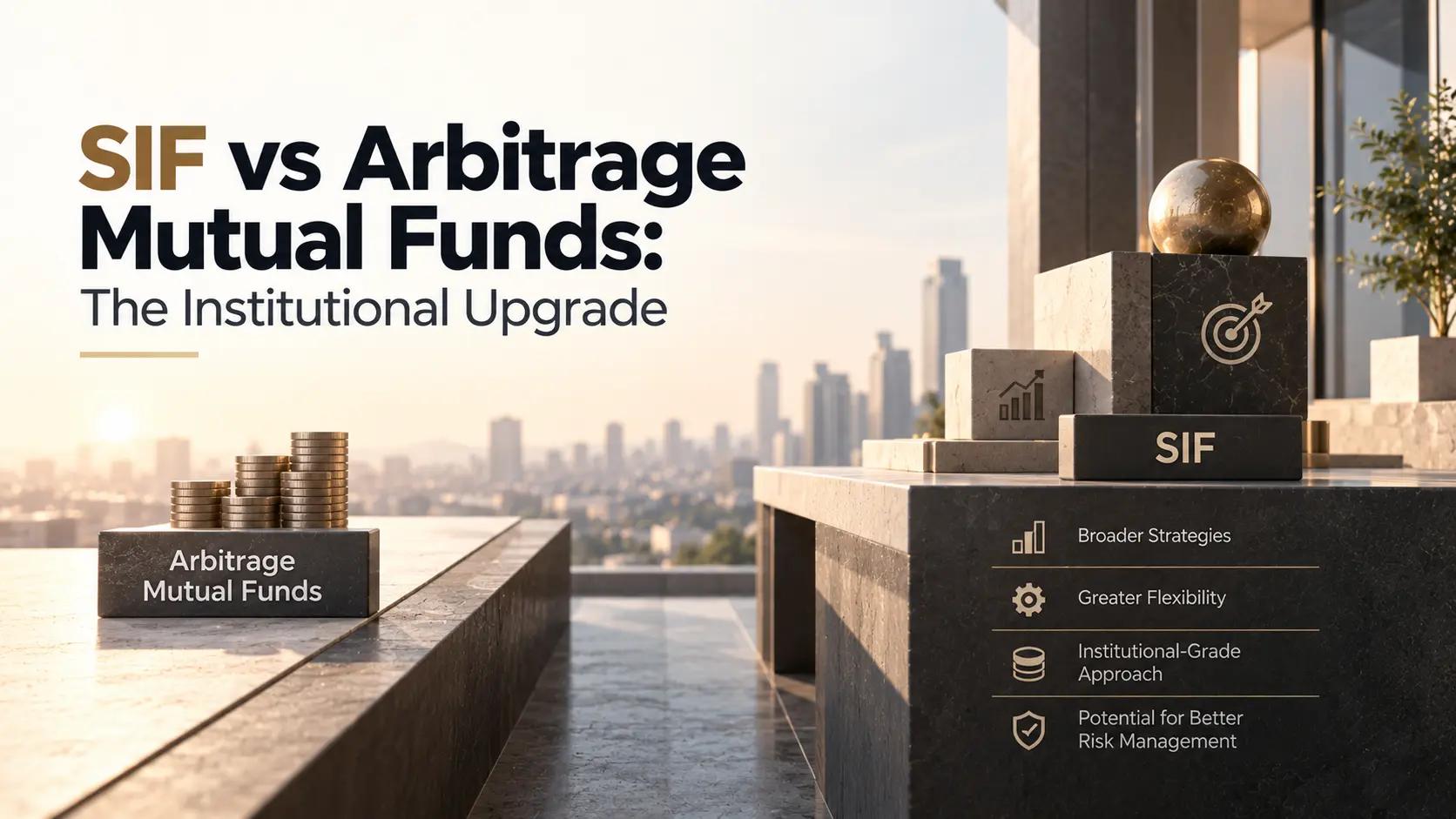
The SIP is a contribution mechanism. The SIF is an investment vehicle. You can actually run a SIP inside a SIF, provided your total investment crosses the Rs 10 lakh SEBI threshold.
The real difference lies in what's inside the fund. Standard equity mutual funds used for SIPs must, by law, remain long-only. Under the SEBI (Mutual Funds) Regulations, 1996, they cannot hold short positions to protect your capital. When the market bleeds, your mutual fund bleeds.
A Specialized Investment Fund is structurally different. SEBI permits SIFs to take an unhedged short exposure of up to 25 percent of their net assets using derivatives. SEBI introduced this under its SIF circular dated February 27, 2025.
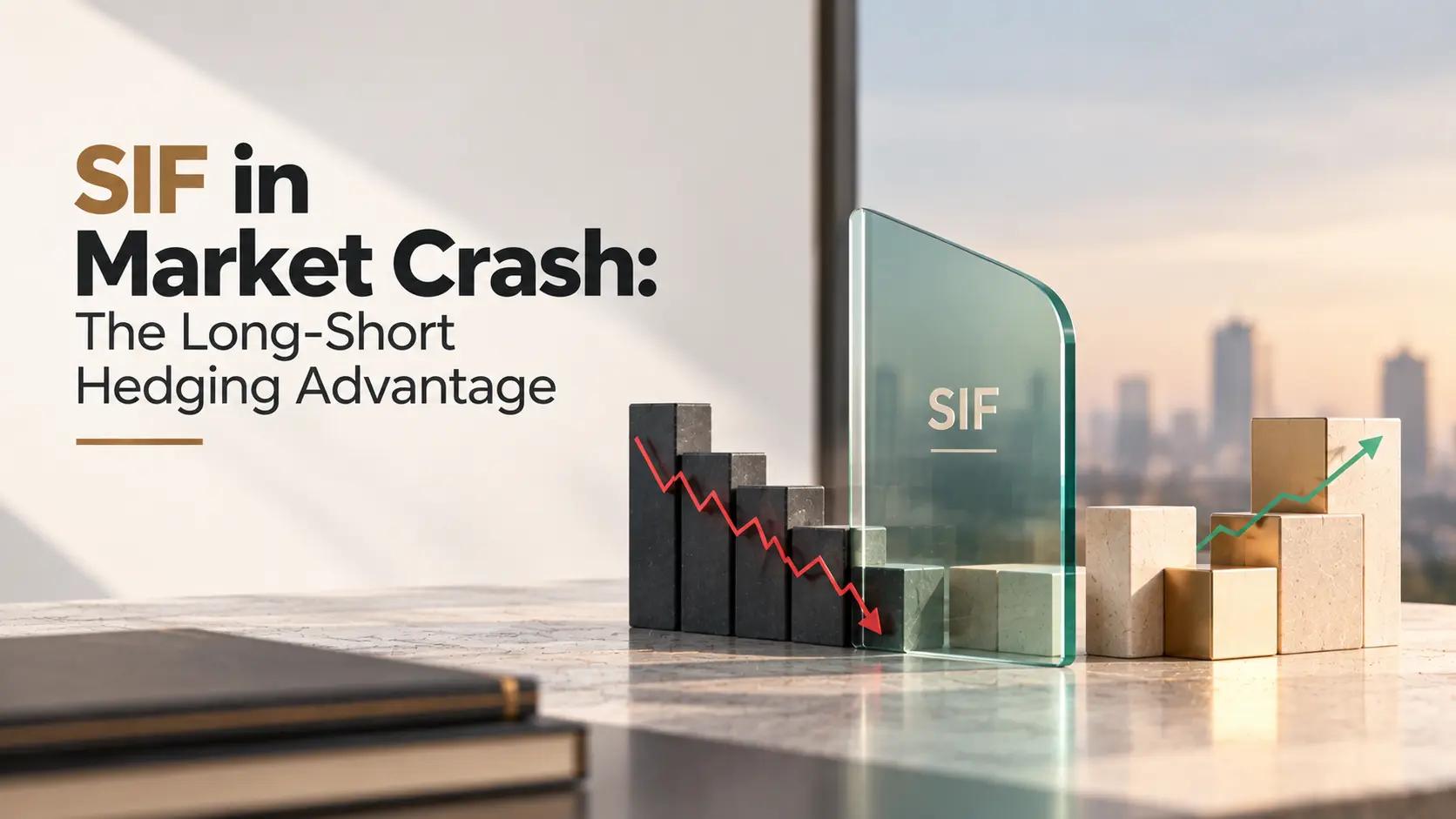
When the market starts crashing, a SIF manager can legally bet against overvalued stocks or the broader index. If the market drops 20 percent, the SIF's short positions surge in value, acting as a structural shock absorber. Your portfolio stays flat, instead of crashing 20 percent.
To understand how this alpha is generated, read our guide on SIF Strategies: How long-short arbitrage derivatives work.
The Vestbox Case Study: The Architectural Upgrade
Let us look at a real-world scenario to see why blending both tools is the ultimate strategy.
The Client: A 45-year-old executive built a Rs 40 lakh corpus over 10 years with a monthly SIP in a large-cap mutual fund.
The Problem: When a sudden global macro shock hit the markets, the index dropped a violent 18 percent in a single quarter. Based on Vestbox data, his large-cap SIP portfolio suffered an estimated drawdown of roughly 16 percent. He lost an estimated Rs 6.4 lakh in three months. He was on the verge of panic selling at the bottom.
The Vestbox Restructure: We did not stop his SIP. We kept the SIP running to continue rupee cost averaging into the core mutual fund. However, we redirected Rs 15 Lakhs of his existing corpus into an Equity Long Short SIF.
The Math: When the market faced its next 12 percent correction, the SIF manager aggressively shorted weak mid-cap stocks. Based on Vestbox data, while his core mutual fund dropped 12 percent, the SIF allocation restricted its drawdown to an estimated 2 percent. The SIF acted as a shock absorber, limiting his overall portfolio loss to an estimated Rs 3.2 Lakhs instead of Rs 6.4 Lakhs.
He kept the power of his SIP for accumulation, but added the power of a SIF for preservation.
To see how this stacks up against other wealth vehicles, read our breakdown on SIF vs PMS vs Mutual Funds.
Disclaimer: The above scenario is an illustrative study based on expected market behavior and estimated Vestbox data. The figures are approximate and meant strictly for educational purposes to demonstrate portfolio architecture. Actual market returns and fund performance will vary based on real-time conditions.
How to Combine SIPs and SIFs
This is not about killing the SIP. It is about architectural maturity.
Keep your SIP: Continue your monthly SIPs into broad-market index funds or flexi-cap funds. This is your core engine for long-term wealth compounding.
Add a SIF: Once your total corpus crosses Rs 10 Lakhs, allocate a portion of your existing wealth into a Specialized Investment Fund. This acts as your satellite allocation, designed to hedge your core portfolio during market crashes.
If you are ready to add institutional-grade downside protection to your existing wealth, you can Invest in SIF Funds directly through the Vestbox App.
Frequently Asked Questions
What is the main difference between SIP and SIF?
The main difference is the phase of your wealth journey. A SIP is for wealth accumulation, using rupee-cost averaging to build a corpus from scratch. A SIF is for wealth preservation, using derivatives to hedge an existing Rs 10 lakh corpus during market crashes.
Is SIP better than SIF for HNIs?
They serve different purposes. For high-net-worth individuals, SIPs remain an excellent tool for continuous wealth accumulation. However, a SIF is necessary to hedge that large accumulated corpus against market crashes.
Can I start a SIP in a SIF?
Yes. AMCs can offer a systematic plan for a SIF, provided your total aggregate investment crosses the Rs 10 lakh minimum threshold mandated by SEBI at the PAN level.
Why do mutual funds not hedge during a crash?
Under standard mutual fund regulations, equity schemes must be long-only. They are legally prohibited from holding short positions to protect your capital during a crash.
Are SIFs safer than SIPs?
SIFs are not necessarily safer, but they manage risk differently. While a SIP inherits the full market downside, a SIF can use derivatives to hedge its positions, resulting in much lower drawdowns during a crash.
Should I stop my SIP to invest in a SIF?
No. Continue your SIP for long-term compounding. A SIF is a satellite investment designed to hedge your core portfolio. A mature portfolio uses both tools together.
Want the full overview of SIFs, regulations, and benefits? Explore the complete guide: What is SIF Fund? How do SIFs work?
Ready to explore?
SEBI-regulated long-short and hedging strategies designed to capture opportunities in all market conditions.
Disclaimer
Mutual fund investments are subject to market risks. Read all scheme-related documents carefully. Please consult a certified financial advisor before making any investment decisions.
Trust & Compliance
This article has been created following our strict Editorial Policy. We believe in complete transparency regarding how we operate; you can read our Disclosures. For legal liabilities and risk factors, please review our Disclaimer.