Best SIF Funds in India: Compare Strategy, TER & AUM


If you are hunting for the Best SIF Funds in India by sorting a spreadsheet based on 3-month returns, you are not investing. You are gambling with institutional tools.
Specialized Investment Funds are not momentum stocks. They are mathematical, hedged structures designed to protect your wealth during market crashes. Chasing short-term returns in a long-short strategy is like buying a high-end home security system based on how loud the alarm sounds, not how well it actually detects a break-in.
Key Takeaways
- Short-term 3-month returns do not determine the best SIF funds in India; risk-adjusted performance and drawdown history do.
- Investors must compare SIFs within their specific strategy categories, such as Equity Long Short versus Hybrid Long Short, rather than comparing them all together.
- The Total Expense Ratio, Risk Band, and fund manager experience are critical metrics that outweigh historical performance.
- SEBI requires a strict minimum investment of Rs 10 lakh per investor at the PAN level across all SIF strategies of a single AMC.
- Reading the Investment Strategy Information Document, or ISID, is mandatory to understand the specific derivative exposure and leverage limits of a fund.
- Direct plans are vastly superior to regular plans due to lower expense ratios, which compound significantly over time.
Table of Contents
Click to Expand
The Problem with Standard SIF Lists
Most industry blogs rank Specialized Investment Funds by their 3-month or 1-year returns.
This is a fundamentally flawed approach.
A long short fund might generate 15 percent in a raging bull market simply because its long positions flew. But if that fund does not actively hedge its downside, it will collapse 30 percent when the market reverses. High returns do not mean a good fund. It just means the fund took on high, unhedged beta risk.
If you want to truly understand how these funds generate alpha, read our guide on SIF Strategies: how long-short arbitrage derivatives work. True evaluation requires looking under the hood at the derivative architecture.
Top SIF Funds in India
Instead of ranking funds by short-term returns, Vestbox evaluates funds on structural integrity, AUM stability, and strategy compliance with the SEBI SIF circular dated February 27, 2025.
You can verify the framework in SEBI's February 2025 SIF Circular.
Here is a look at prominent SIF strategies currently in the Indian market. This list is for educational purposes only and is not a recommendation.
| Fund Name (Direct Plan) | AMC | Strategy Category | Risk Band | Liquidity |
|---|---|---|---|---|
| Qsif Equity L/S | Quant MF | Equity Long-Short | Level 4 | Open-ended - any day |
| Qsif Active Asset Allocator | Quant MF | Active Asset Allocator | Level 3 | Fortnightly |
| DynaSIF Ex-Top 100 L/S | 360 ONE Asset | Equity Ex-Top 100 | Level 5 | TBC |
| Altiva Ex-Top 100 L/S | Edelweiss MF | Equity Ex-Top 100 | Level 5 | Open-ended - any day |
| Qsif Ex-Top 100 L/S | Quant MF | Equity Ex-Top 100 | Level 5 | Open-ended - any day |
| WSIF Equity L/S | The Wealth Company MF | Equity Long-Short | Level 5 | Open-ended - any day |
| WSIF Ex-Top 100 L/S | The Wealth Company MF | Equity Ex-Top 100 | Level 5 | Open-ended - any day |
| Qsif Hybrid L/S | Quant MF | Hybrid Long-Short | Level 5 | Twice a week |
| Arudha Equity L/S | Bandhan MF | Equity Long-Short | Level 5 | Open-ended - any day |
| RedHex Hybrid L/S | HSBC MF | Hybrid Long-Short | Level 2 | Weekly (10-day notice) |
| Qsif Sector Rotation L/S | Quant MF | Sector Rotation | Level 5 | Open-ended - any day |
| ISIF Ex-Top 100 L/S | ICICI Prudential | Equity Ex-Top 100 | Level 5 | Open-ended - any day |
| ISIF Hybrid L/S | ICICI Prudential | Hybrid Long-Short | Level 5 | Open-ended - any day |
| ISIF Active Asset Allocator | ICICI Prudential | Active Asset Allocator | Level 5 | Fortnightly |
| ISIF Equity L/S | ICICI Prudential | Equity Long-Short | Level 5 | Open-ended - any day |
| Titanium Equity L/S | Tata MF | Equity Long-Short | Level 5 | Open-ended - any day |
| Diviniti Equity L/S | ITI MF | Equity Long-Short | Level 2 | Open-ended - any day |
| Altiva Hybrid L/S | Edelweiss MF | Hybrid Long-Short | Level 1 | Twice a week |
| Apex Hybrid L/S | Aditya Birla SL MF | Hybrid Long-Short | Level 1 | Interval - fortnightly |
| DynaSIF Active Asset Allocator | 360 ONE Asset | Active Asset Allocator | Level 2 | Fortnightly |
| Magnum Hybrid L/S | SBI MF | Hybrid Long-Short | Level 2 | Fortnightly |
| DynaSIF Equity L/S | 360 ONE Asset | Equity Long-Short | Level 5 | Open-ended - any day |
| Arudha Hybrid L/S | Bandhan MF | Hybrid Long-Short | Level 1 | Twice a week |
| Titanium Hybrid L/S | Tata MF | Hybrid Long-Short | Level 3 | Twice a week |
| Platinum Hybrid L/S | Mirae Asset MF | Hybrid Long-Short | Level 2 | Weekly |
| Sapphire Equity L/S | Franklin Templeton | Equity Long-Short | Level 5 | Open-ended - any day |
| Arthaya Equity L/S | Union MF | Equity Long-Short | Level 5 | Open-ended - any day |
| Invesco Summit Equity L/S | Invesco MF | Equity Long-Short | Level 5 | Open-ended - daily |
| Magnum Ex-Top 100 L/S | SBI MF | Equity Ex-Top 100 | Level 3 | Open-ended - any day |
| Jio BR Prism Hybrid L/S | Jio BlackRock MF | Hybrid Long-Short | Level 2 | Twice a week (Mon & Wed) |
Notice that we do not rank them by returns. A Level 5 Risk Band fund will naturally show higher returns in a bull market, but it carries significantly more derivative and leverage risk.
To execute your chosen strategy without the friction of retail execution, you can Invest in SIF Funds directly through the Vestbox platform.
How to Compare SIF Funds
To choose the right fund, you must apply a rigorous due diligence process.
For the checklist:
Pillar 1: Strategy Over Returns
Never compare an Equity Long Short fund with a Hybrid Long Short fund. They serve different purposes.
An Equity Long Short fund generates alpha and provides downside protection in the equity space. A Hybrid Long Short fund aims for absolute, market-neutral returns.
Choose the strategy that fills a gap in your core portfolio.
Pillar 2: The Drawdown Test
Ask the AMC for the fund's maximum drawdown during the last severe market correction.
A fund that returned 12 percent but dropped 20 percent in a crash is worse than a fund that returned 9 percent but only dropped 2 percent in a crash.
To understand how to size these positions, read our guide on SIF Portfolio Allocation.
Pillar 3: Fund Manager Experience
SIFs use complex derivatives like unhedged shorting and delta-neutral options.
A standard mutual fund manager cannot just step in and run this.
Check the ISID to ensure the Chief Investment Officer has at least 10 years of derivative-specific experience managing large AUMs.
Pillar 4: The TER Drag
The Total Expense Ratio directly eats your alpha.
In the SIF space, a high TER is justified only if the fund is executing high-frequency arbitrage that requires expensive co-located servers.
If it is a simple equity long-short fund, the TER should be under 1.5 percent.
Pillar 5: Liquidity Reality
Check the redemption frequency.
Some SIFs allow daily redemption, while others are interval funds that only allow weekly or monthly withdrawals.
If you need liquidity for your business, a monthly-redemption SIF will trap your capital.
For deep clarity, explore our dedicated guide on How to choose the right SIF.
The Vestbox Case Study: Why Short-Term Returns Trap HNIs
Let us look at a real-world scenario to see why short-term returns are a trap.
The Client: A 45-year-old entrepreneur looking to park Rs 50 Lakhs in a SIF after an online blog ranked a fund highly for its 19 percent 3-month return.
The Problem: Based on Vestbox data, we intercepted the transaction. The fund had achieved that 19 percent return by taking a massive, unhedged directional bet on mid-cap stocks using derivatives. It was essentially a leveraged momentum fund disguised as a SIF.
The Math: Had the market experienced a 10 percent correction, the fund's 25 percent unhedged short exposure would have amplified the losses, resulting in an estimated drawdown of roughly 18 percent. The client would have lost Rs 9 Lakhs in a matter of weeks chasing a short-term return.
The Solution: We redirected the client to a fund with a lower 3-month return of 7 percent, but one that maintained a strict market-neutral arbitrage strategy. When the market later corrected, the client's capital was fully protected, and they captured an estimated post-tax return of roughly 9 percent annually with near-zero drawdown.
He saved his capital by focusing on strategy over short-term returns.
Before investing, you must also understand the tax implications; explore them in our guide on SIF Taxation.
Disclaimer: The above scenario is an illustrative study based on expected market behavior and estimated Vestbox data. The figures are approximate and meant strictly for educational purposes to demonstrate portfolio architecture. Actual market returns and fund performance will vary based on real-time conditions.
Frequently Asked Questions
Which SIF fund is best in India?
There is no single best SIF fund. The best fund depends entirely on your portfolio needs. If you want equity hedging, an Equity Long Short fund is best. If you want market neutral income, a Hybrid Long Short fund is best. Never choose a fund based on 3-month returns.
How should I compare SIF funds?
Compare SIFs using 5 pillars: Strategy, Drawdowns, Fund Manager Experience, Total Expense Ratio, and Liquidity. Always compare funds within the same strategy category.
Are SIF funds better than mutual funds?
SIFs are not better or worse. They serve a different purpose. Mutual funds are for core long-term compounding. SIFs are satellite investments used for hedging, arbitrage, and generating market-independent alpha. A mature portfolio needs both.
Which SIF strategy is best?
The best SIF strategy fills a gap in your current portfolio. If you have too much direct equity exposure, a Long Short strategy is best to hedge it.
What is the minimum investment required for SIF?
The minimum investment requirement for a SIF is strictly Rs 10 lakh per investor, calculated at the PAN level across all SIF strategies of a single AMC.
What is the difference between a Direct and Regular SIF plan?
A Direct Plan excludes distributor commissions, so it has a lower Total Expense Ratio. A Regular Plan includes commissions, making it more expensive. Over time, Direct Plans generate significantly higher final returns.
Can beginners invest in SIFs?
No. SIFs use complex derivatives, short selling, and arbitrage. They are strictly for experienced investors and High-Net-Worth Individuals who understand market volatility and derivative mechanics.
What is the Risk Band in a SIF?
The Risk Band is a SEBI-mandated metric that shows the fund's risk level on a scale of 1 to 5. A Level 1 fund has low risk, while a Level 5 fund carries very high risk due to leverage and derivative exposure.
Are high return SIF funds always better?
No. High returns usually indicate that the fund took on excessive, unhedged directional risk. A good SIF prioritizes downside protection over maximizing short-term upside.
Where can I check the latest SIF NAV and TER?
You can check the latest NAV and TER on the AMC website, the Vestbox platform, or in the fund house’s Investment Strategy Information Document (ISID).
Want the full overview of SIFs, regulations, and benefits? Explore the complete guide: What are Specialized Investment Funds (SIFs)? How do SIFs work?.
Ready to explore?
SEBI-regulated long-short and hedging strategies designed to capture opportunities in all market conditions.
Disclaimer
Mutual fund investments are subject to market risks. Read all scheme-related documents carefully. Please consult a certified financial advisor before making any investment decisions.
Trust & Compliance
This article has been created following our strict Editorial Policy. We believe in complete transparency regarding how we operate; you can read our Disclosures. For legal liabilities and risk factors, please review our Disclaimer.
Share & Save Article
Other Posts

What is ESOP? A Complete Guide to Employee Stock Ownership Plans
Aug 6, 2026
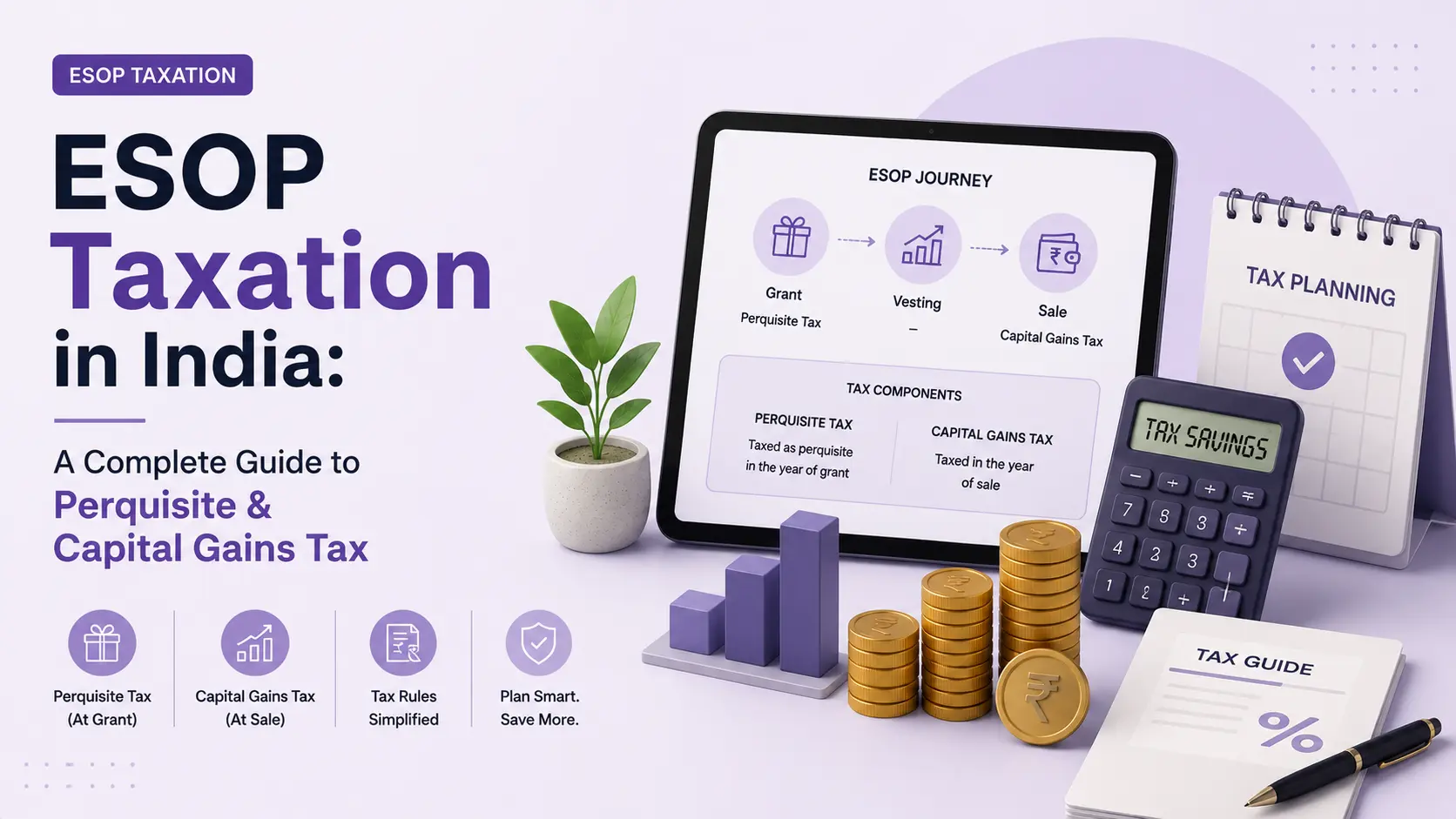
ESOP Taxation in India: A Complete Guide to Perquisite & Capital Gains Tax
Aug 7, 2026
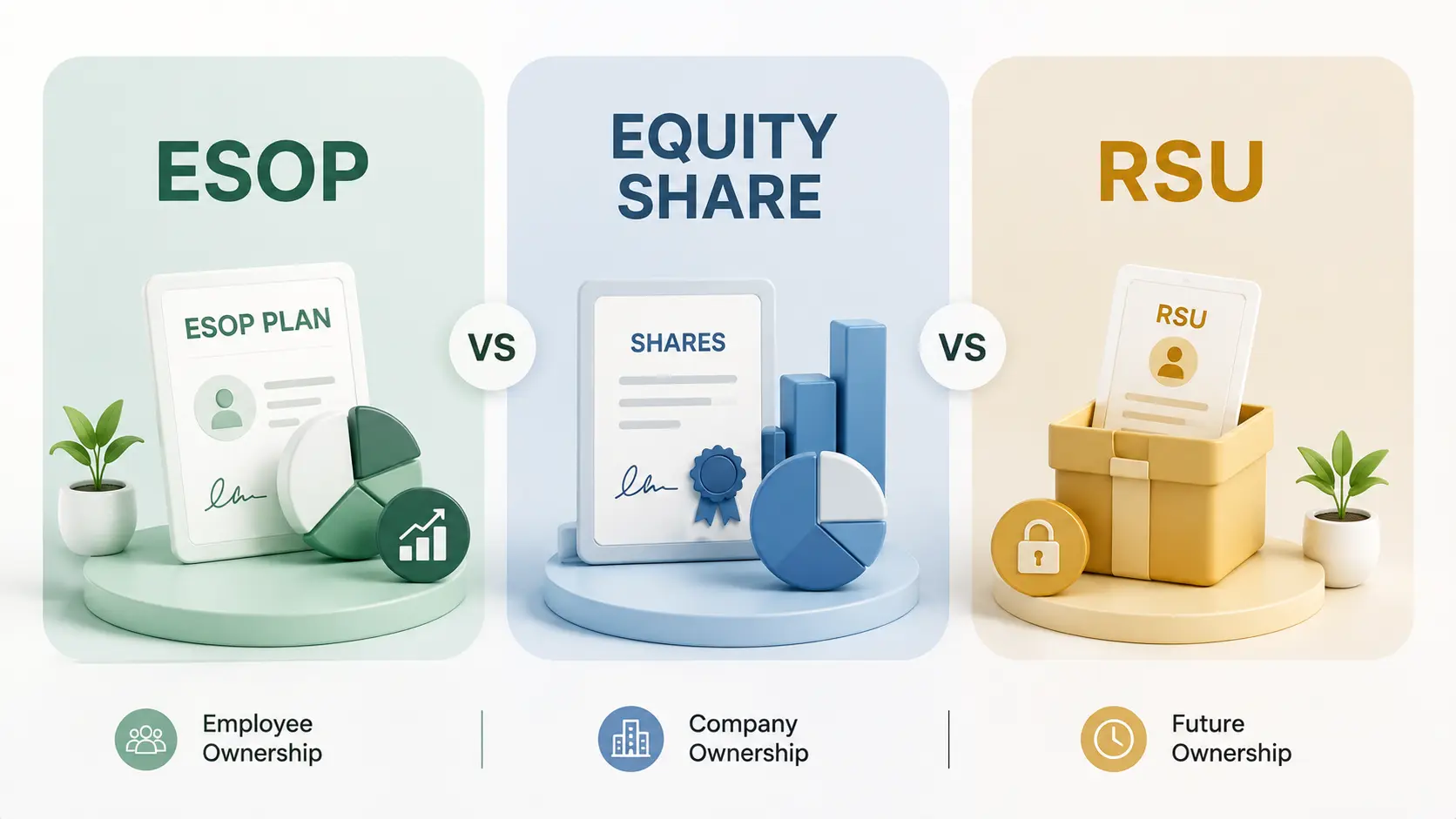
ESOP vs Equity Shares vs RSU: Understanding Employee Equity
Aug 11, 2026
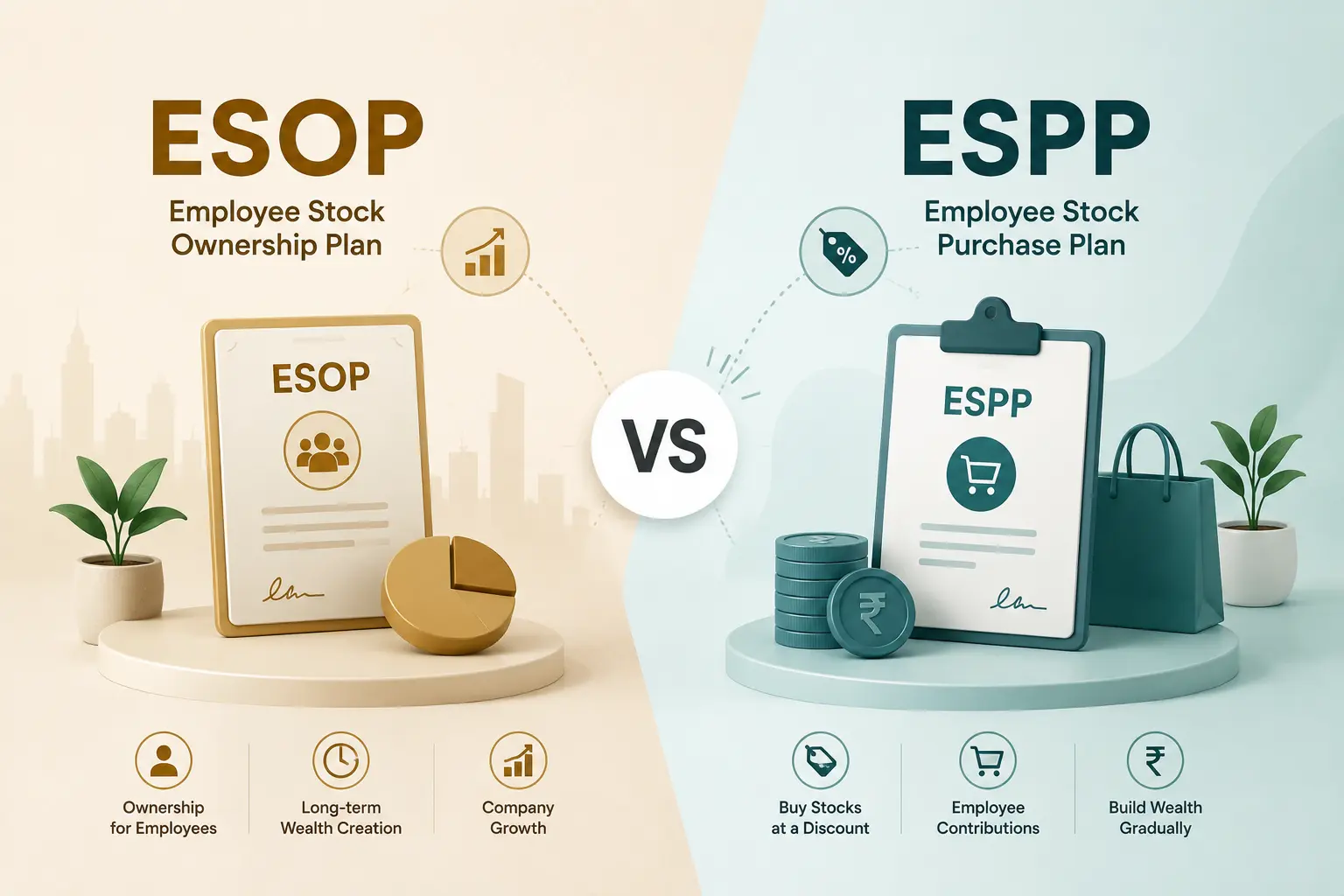
ESOP vs ESPP: Which Employee Equity Plan is Better?
Aug 11, 2026
