What is a Portfolio Review? A Complete Guide to Fixing Your Investments

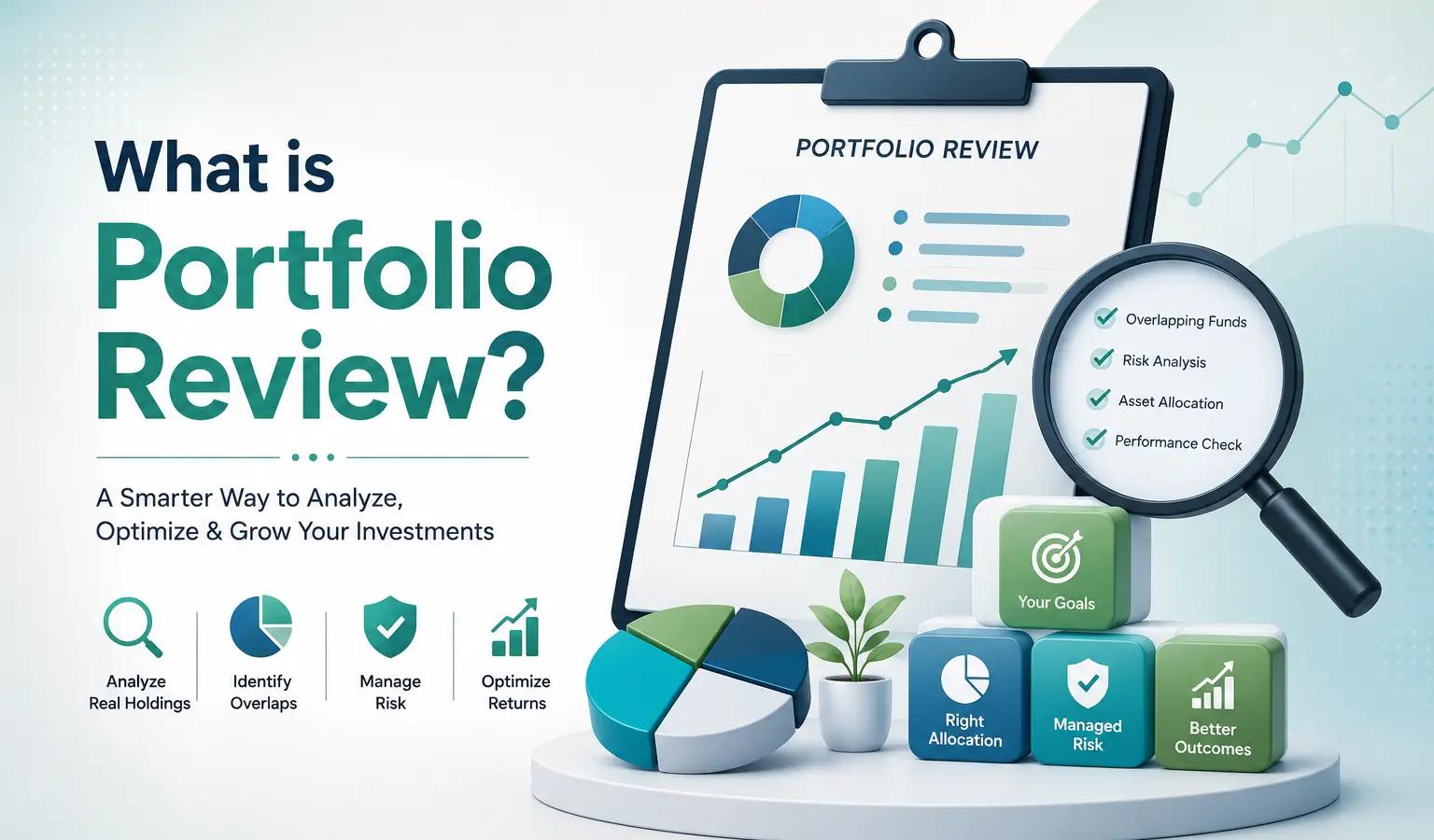
Table of Contents
Click to Expand
- Introduction
- What is Portfolio Review?
- Why Do I Need a Portfolio Review?
- 5 Signs You Need a Portfolio Review
- How Do You Identify Overlapping Mutual Funds?
- The Hidden Risks of a Self-Managed Portfolio
- What Happens During a Professional Portfolio Review?
- The HNI Glass Ceiling: When Mutual Funds Stop Working
- The Fix: Moving to Engineered Portfolios
- How Vestbox Does Portfolio Reviews
- When to Consider PMS After a Review
- Conclusion / Final Thoughts
- Frequently Asked Questions
The most dangerous number in your mutual fund app is your total return.
It hides everything. It hides the fact that your "diversified" funds are actually holding the same 15 large-cap stocks. It hides the fact that your risk has completely drifted. You look at the green number, feel safe, and ignore the structural damage happening underneath.
But under the surface, your portfolio is usually a mess. It is likely full of overlapping stocks, unintended sector bets, and risk that has drifted far from your original plan.
That is exactly why a portfolio review exists. This guide breaks down what a portfolio review actually looks at, how to find hidden overlaps, and what to do when your current investments stop working.
What is a Portfolio Review?
A portfolio review is a structural health check for your investments.
Most people only look at their fund names. A real review strips away the fund names and looks at the actual underlying stocks. It analyzes exactly what you own to find hidden risks, overlapping positions, and gaps in your strategy.
It is not about picking the "best" mutual fund. It is about making sure the funds you already own actually work together.
Why Do I Need a Portfolio Review?
Because diversification is often an illusion.
You might hold 8 different mutual funds across different categories. But mutual fund managers in India often chase the same large, liquid stocks. When you dig into the holdings, you might find that 60% of your money is tied up in the same 15 large-cap companies.
You are not diversified. You are just paying fees to multiple managers to hold the same stocks. A portfolio review exposes this misalignment before it costs you money during a market crash.
5 Signs You Need a Portfolio Review
How do you know if your portfolio is broken? You don't need to guess. We broke down the 5 signs you need a portfolio review, but here are the most common red flags:
- You own too many funds: If you hold more than 6-7 mutual funds, overlap is almost guaranteed.
- Your returns match the index: If your portfolio returns resemble the Nifty 50, you are paying active management fees for an index-like portfolio.
- You don't know your sector weights: If you can't say exactly how much of your money is in IT vs. Healthcare, you need a review.
- You bought funds at different times: Funds change their mandates. A fund you bought 3 years ago might look completely different today.
- You have never looked under the hood: If you only check your NAV and never look at the individual stock holdings, you are flying blind.
How Do You Identify Overlapping Mutual Funds?
Identifying overlaps manually is nearly impossible. You would have to download the factsheet for every fund you own, list out every single stock, and cross-reference them in an Excel sheet. Nobody has the time for that.
It is much simpler to look at the top 10 holdings of each fund. Do HDFC Flexi Cap and SBI Midcap Fund both hold Reliance, HDFC Bank, and Infosys in their top 5? If yes, you have a severe overlap.
To actually see this clearly, you need to run your holdings through a diagnostic tool. Run a structural portfolio review to analyse your underlying stocks and identify specific overlaps.
The Hidden Risks of a Self-Managed Portfolio
Many investors try to skip mutual funds entirely. They open a Demat account and buy 15-20 individual stocks.
This sounds like ultimate control. In reality, it usually introduces massive behavioral risks. Self-managed portfolios often suffer from emotional trading. Investors hold losing stocks hoping they bounce back, and sell winning stocks too early.
Worse, self-managed investors rarely calculate their own overlap. They might buy 5 different IT companies, thinking they are diversified, when in reality, they just made a massive, concentrated bet on the US tech sector. The hidden risks of a self-managed portfolio almost always show up during a market correction.
What Happens During a Professional Portfolio Review?
A proper review does not just give you a list of funds. It follows a strict diagnostic process:
- Data Mapping: You input your current fund names or stock holdings.
- X-Ray Analysis: The system strips away the fund names and maps the exact percentage of your money sitting in each stock and sector.
- Overlap Detection: It highlights redundant stocks that are dragging down your returns.
- Risk Drift Analysis: It checks whether your current portfolio still aligns with your original risk appetite.
- Actionable Fixes: It identifies exactly which funds to sell to address the structural gaps.
The HNI Glass Ceiling: When Mutual Funds Stop Working
If your portfolio has grown past ₹50 Lakhs, a standard review might reveal a bigger problem. You might have hit the HNI glass ceiling.
As mutual funds gather more assets, they are forced to hold 60 to 100+ stocks. The fund gets bloated. The manager can no longer make agile moves. Your returns start to drag.
When a portfolio review shows that your mutual funds are too bloated and unresponsive, it is time to consider structural alternatives. You can read more about the HNI glass ceiling with mutual funds to see exactly where standard funds break down at scale.
The Fix: Moving to Engineered Portfolios
Once a review exposes the bloat and overlap in mutual funds, the next step is fixing it. High-net-worth investors usually transition to a structure that eliminates overlap by design: Portfolio Management Services (PMS).
PMS does not pool your money. A manager builds a focused basket of 20 to 30 high-conviction stocks directly in your Demat account. There is zero internal overlap. If you want to understand why this concentrated approach works, look at how PMS generates alpha through concentrated portfolios.
How Vestbox Does Portfolio Reviews
We do not do sales pitches. We do diagnostics.
We keep the setup simple. You do not need to upload bulky PDF statements or share your login passwords. We only need your PAN number. This allows us to securely fetch your holdings directly. Your data is completely safe and never shared with third parties.
Once we pull your data, a real Vestbox expert steps in. They will personally communicate with you to understand your goals and finalize the review process.
We explicitly do not do this at scale. We do not use automated, instant-checker tools that miss the nuances of a real portfolio. We spend time examining your specific holdings. On average, it takes about 12 to 24 hours for our team to analyze your investment and prepare your report.
No rushed algorithms. No hidden charges. Just a clear, human look at whether your investments are actually assembled or engineered.
Think your portfolio has overlaps? Get a complimentary Portfolio Review from Vestbox right now and see exactly what you own.
When to Consider PMS After a Review
A review gives you the data. What you do next is up to you.
If the review shows your mutual funds are working fine, keep them. But if it shows severe overlap, risk drift, or the HNI glass ceiling, it might be time to upgrade your structure. For investors exceeding the ₹50 Lakh mark, moving to a dedicated PMS mandate is usually the most logical solution.
You can explore Portfolio Management Services in India to see if a bespoke, concentrated strategy makes sense for your next phase of wealth creation.
Conclusion / Final Thoughts
Stop guessing about your risk. Stop assuming your funds are diversified just because they have different names.
A true portfolio review looks past the surface. It maps your actual stocks, finds the hidden overlaps, and shows you exactly where your portfolio is broken. Once you have the data, you can stop assembling investments and start engineering real outcomes.
Frequently Asked Questions
What exactly happens during a portfolio review?
It is a deep-dive diagnostic in which an investor strips away mutual fund names to analyze the actual underlying stocks, looking for hidden risks, concentrated bets, and structural gaps.
Can different mutual funds hold the same stocks?
Yes. This is called overlap. If a large-cap fund and a flexi-cap fund both have Reliance and HDFC Bank in their top 5 holdings, your diversification is an illusion.
Why is looking at total returns not enough?
A good return number hides structural flaws. You need a review to ensure you aren't taking on more risk than you think, or heavily betting on just one or two sectors without realizing it.
What are the main things to analyze in a mutual fund portfolio?
You should map the exact sector weightings, check for stock overlap across different funds, and verify if the actual risk matches your original investment goal.
Do you have to pay for a professional portfolio review?
Not always. Many modern wealth platforms offer diagnostic tools that map your overlaps for free, demonstrating the value of structural investing before you ever pay a fee.
Will sharing my portfolio data lead to spam calls?
Legitimate wealth platforms operate on a "no-pitch" diagnostic model. If a service asks for your holdings, they should provide the structural data without hounding you to buy products.
How many mutual funds are too many?
Anything over 5-6 funds almost guarantees overlap. Instead of adding more funds to diversify, you should x-ray the top holdings of your existing ones to see if they are buying the same heavyweights.
How does a mutual fund's risk profile change over time?
This is called risk drift. A mid-cap manager might start hoarding cash or sneaking in large-cap stocks during a downturn, completely changing the risk you originally signed up for.
Can a small portfolio of 3 funds be risky?
Absolutely. Even with just three funds, you could easily have 50% of your money sitting in the exact same 10 large-cap stocks. Small portfolios still need structural checks.
Is it safe to share CAS statements or PAN details online?
Yes, if you use SEBI-registered platforms. Reputable services use encrypted connections and only require your PAN to fetch data securely, keeping your login credentials completely private.
Should I trust automated portfolio checkers or manual reviews?
Automated tools give instant results but often miss nuanced risks. A manual, expert-led review takes 12 to 24 hours, but it catches subtle drift and overlap that algorithms miss.
Disclaimer
Mutual fund investments are subject to market risks. Read all scheme-related documents carefully. Please consult a certified financial advisor before making any investment decisions.
Trust & Compliance
This article has been created following our strict Editorial Policy. We believe in complete transparency regarding how we operate; you can read our Disclosures. For legal liabilities and risk factors, please review our Disclaimer.
Share & Save Article
Other Posts
How to Check Income Tax Refund Status Online: A Complete Guide
Jul 18, 2026
Why is Income Tax Refund Delayed? A Complete Guide to Processing Times
Jul 18, 2026
What is Portfolio at Risk? A Complete Guide to Meaning, Formula, Calculation, & Benefits.
Jun 5, 2026

What is SIP & How Does It Actually Work?
May 27, 2026
