ESOP Buyback in India: The Ultimate Liquidity Guide

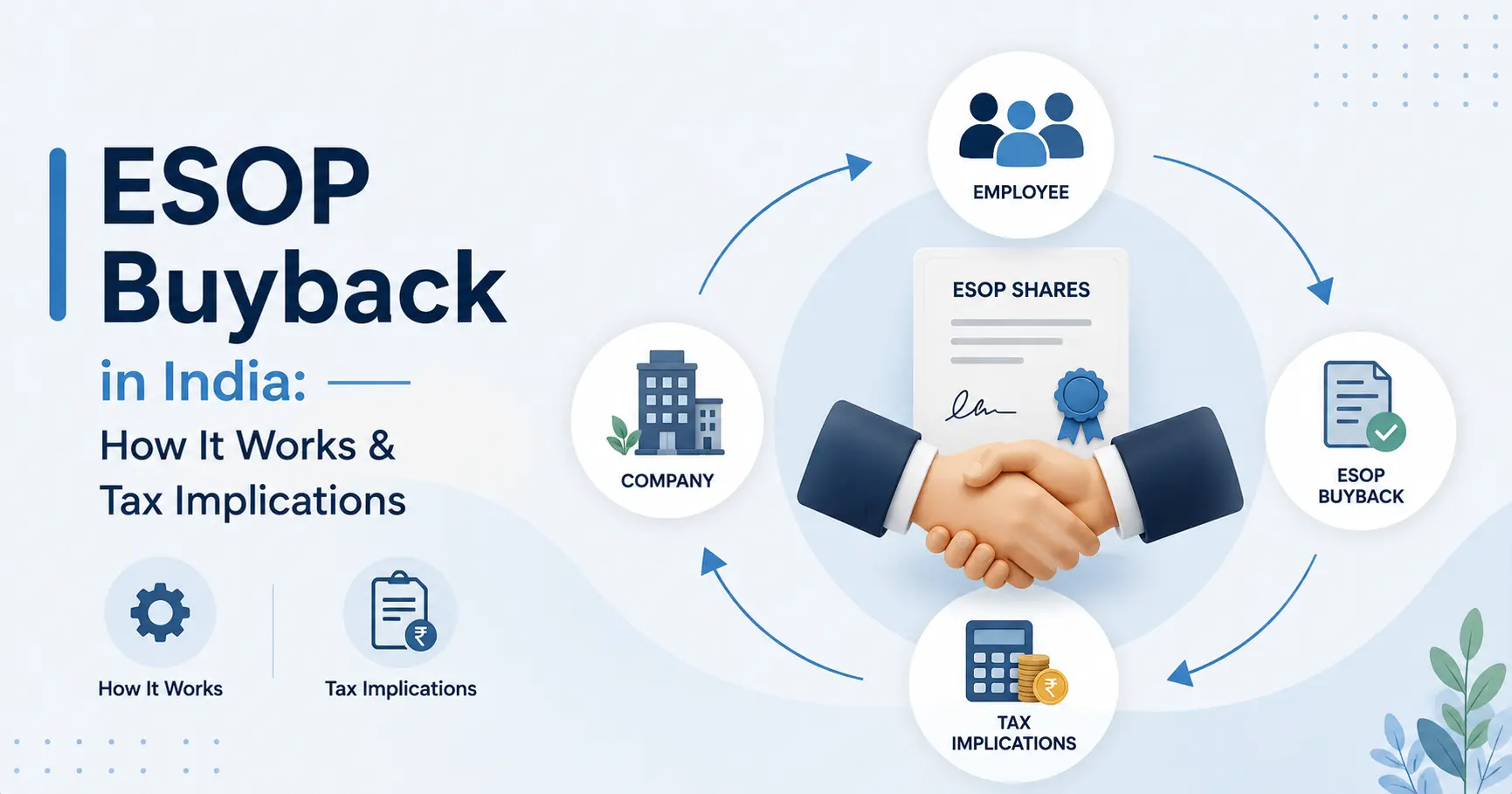
Table of Contents
Click to Expand
- What is an ESOP Buyback?
- Why Do Companies Initiate Buybacks?
- The ESOP Buyback Process in India
- Taxation on ESOP Buybacks in India
- ESOP Buyback vs. Secondary Sale: Which is Better?
- What Happens to Your Wealth Post-Buyback?
- How Vestbox Helps & Why Choose Vestbox
- Conclusion / Final Thoughts
- Frequently Asked Questions
Key Takeaways:
- Meaning: An ESOP buyback is when a company uses its own profits to repurchase vested shares directly from employees.
- The Big Advantage: Unlike secondary sales, buybacks of unlisted shares are completely exempt from Capital Gains Tax under Section 10(10D).
- The Trigger: Companies usually initiate buybacks to reward early employees, clean up the cap table, or prepare for an IPO.
- The Process: It requires board approval, an independent valuation, a formal offer letter, and a specific acceptance window.
You have vested ESOPs. The company is growing. But there is no IPO in sight. You search for external buyers, but the secondary market is dead.
What happens if the company itself decides to buy the shares back from you?
This is known as an ESOP buyback. For employees holding unlisted shares, it is often the cleanest and most tax-efficient way to convert paper wealth into actual cash.
If you need a refresher on the exact difference between vested options and actual shares, read our complete guide on What is ESOP.
What is an ESOP Buyback?
An ESOP buyback is exactly what it sounds like. The company uses its own funds to purchase vested shares directly from its employees.
You do not have to find an external VC or wait for an IPO. The company offers you cash for your equity, you accept, you transfer the shares back to the company's treasury, and the company cancels them.
This is completely different from you selling your shares to a new investor (a secondary sale). In a buyback, the company is the buyer.
Why Do Companies Initiate Buybacks?
Companies do not buy back shares out of generosity. It is a strategic financial move.
- To Reward Early Employees: Founders and early employees often hold shares at a fraction of a penny. A buyback allows the company to cash them out at the current, much higher fair market value without diluting the cap table for new investors.
- Cap Table Clean-Up: Before a company goes public, having hundreds of former employees sitting on its cap table creates a legal and administrative nightmare. Buybacks consolidate ownership.
- Surplus Cash: If a profitable startup or unlisted company has excess cash and doesn't want to issue dividends, it uses a buyback to return capital to employee-shareholders.
The ESOP Buyback Process in India
You cannot just ask the HR department to buy your shares. The Companies Act, 2013, governs a strict legal process.
- Board Approval: The company's board of directors must pass a special resolution approving the buyback. They must declare the total amount of money allocated for the buyback and the maximum price they are willing to pay per share.
- Independent Valuation: The company cannot set the price randomly. They must hire an independent Merchant Banker to calculate the Fair Market Value (FMV) of the unlisted shares. The buyback price is usually set at or slightly below this FMV.
- The Offer Letter: The company sends a formal tender offer to eligible employees. It states the price, the record date (you must be vested by that date), and the exact time window in which you must accept the offer.
- Acceptance and Payment: If you accept, you submit your shares. The company verifies them, transfers the cash to your bank account, and retires the shares from the market forever.
Taxation on ESOP Buybacks in India
There is a massive misconception that ESOP buybacks are tax-free. They are not.
Section 10(10D) of the Income Tax Act provides a tax exemption for share buybacks; however, the provision applies strictly to listed shares. If you hold unlisted startup ESOPs, the buyback is fully taxable.
Under Section 46A, any money you receive from the company to buy back your unlisted shares is treated as Capital Gains.
How the Tax is Calculated: Your capital gain is the difference between the buyback price the company pays you and your original cost of acquisition (usually the Fair Market Value at the time you exercised the options).
The Tax Rates (Based on Holding Period):
- Short-Term Capital Gains (STCG): If the shares were allotted to you less than 24 months ago, the profit is added to your total income and taxed at your standard income tax slab rate (capping out at 30%).
- Long-Term Capital Gains (LTCG): If the shares were allotted to you more than 24 months ago, the profit is taxed at a flat 20% (without any indexation benefit, based on recent tax updates).
Why the Confusion Exists: Many employees hear "buybacks are tax-free" and assume it applies to their startup equity. Do not make this mistake. When the company sends you the buyback offer letter, they will deduct TDS (Tax Deducted at Source) on the capital gains before depositing the money into your bank account.
To understand the brutal taxes you already paid during the initial exercise phase, read our deep dive into ESOP Taxation in India.
ESOP Buyback vs. Secondary Sale: Which is Better?
If you hold unlisted ESOPs, you usually have two ways to access cash.
| Parameter | ESOP Buyback | Secondary Sale |
|---|---|---|
| The Buyer | The company itself | A new VC or private equity firm |
| Capital Gains Tax | 0% (Exempt under Section 10(10D)) | 20% (If held over 24 months) |
| Price Realization | Usually at or near Fair Market Value | Often at a 20-30% discount to FMV |
| Control | You accept the company's terms | You can negotiate with the buyer |
Which should you choose? If the company announces a buyback, take it. The tax savings are too massive to ignore.
However, companies rarely buy back 100% of an employee's vested pool. If you have a large ESOP grant, you might use the buyback to sell a portion of your shares for tax-free cash, then attempt a secondary sale of the rest to diversify.
What Happens to Your Wealth Post-Buyback?
The company deposits a large sum of cash into your bank account. You have successfully avoided heavy capital gains taxes.
This is the most dangerous moment for an employee.
Most people leave millions of rupees in a savings account because they are traumatized by the illiquidity of the startup world. They eventually dump it into real estate. This replaces single-stock risk with asset-class stagnation.
If you are dealing with a multi-crore payout, you need institutional management. Standard mutual funds are structurally inefficient for the kind of focused, high-conviction portfolios required at this level.
How Vestbox Helps & Why Choose Vestbox
We help founders and early employees transition from concentrated startup equity to diversified public markets.
Why choose Vestbox:
● Pre-Buyback Planning: A buyback is a rare liquidity event. Run a structural portfolio review before the transaction to identify any leaks in tax efficiency and to ensure your overall financial house is in order.
● Post-Buyback Diversification: When the tax-free cash hits your account, we help you replace that single-stock risk. Through Portfolio Management Services in India, we build a focused, actively managed equity portfolio across 20-30 different sectors. We monitor and rebalance it so your wealth continues to compound safely. To see how this active framework works, read our guide on how PMS works through construction and monitoring.
You spent years building the company. Don't let poor planning waste the payout.
Ready to institutionalize your buyback wealth? Explore Portfolio Management Services in India and see how professional managers protect your capital.
Conclusion / Final Thoughts
An ESOP buyback is the cleanest exit for an employee holding unlisted shares.
Because of the Section 10(10D) tax exemption, you can withdraw cash from the company without the heavy 20% capital gains tax hit of a secondary sale.
However, buybacks are rare and dictated by the company's board. You cannot force them. If a buyback window opens, treat it as a massive financial milestone. Calculate your proceeds, take the tax-free cash, and immediately transition that concentrated wealth into a diversified, professionally managed portfolio.
Explore ESOP Services on Vestbox
Frequently Asked Questions
Is ESOP buyback completely tax-free in India?
Yes. If an unlisted company buys back its own shares directly from you using its own funds, the proceeds are exempt from Capital Gains Tax under Section 10(10D) of the Income Tax Act.
Can the company force me to sell my ESOPs in a buyback?
No. A buyback is always a tender offer. You have the right to reject the offer and hold onto your shares. However, if you reject it, you remain stuck with illiquid, unlisted equity.
Does the buyback price match the latest funding round valuation?
Not always. The company usually sets the buyback price based on an independent FMV valuation. It might be slightly lower than the price a VC just paid in the latest round, but the tax savings usually make up for it.
What happens if I sell my shares in a buyback and the company goes public later?
You get nothing. Once you accept the buyback offer, your shares are extinguished. You no longer own any equity in the company and will not benefit from any future IPO upside.
Who is eligible for an ESOP buyback?
Only employees whose shares are vested by the specific "Record Date" set by the company in the buyback offer letter are eligible to participate.
Disclaimer
Mutual fund investments are subject to market risks. Read all scheme-related documents carefully. Please consult a certified financial advisor before making any investment decisions.
Trust & Compliance
This article has been created following our strict Editorial Policy. We believe in complete transparency regarding how we operate; you can read our Disclosures. For legal liabilities and risk factors, please review our Disclaimer.
Share & Save Article
Other Posts
What is ESOP? A Complete Guide to Employee Stock Ownership Plans
Aug 6, 2026
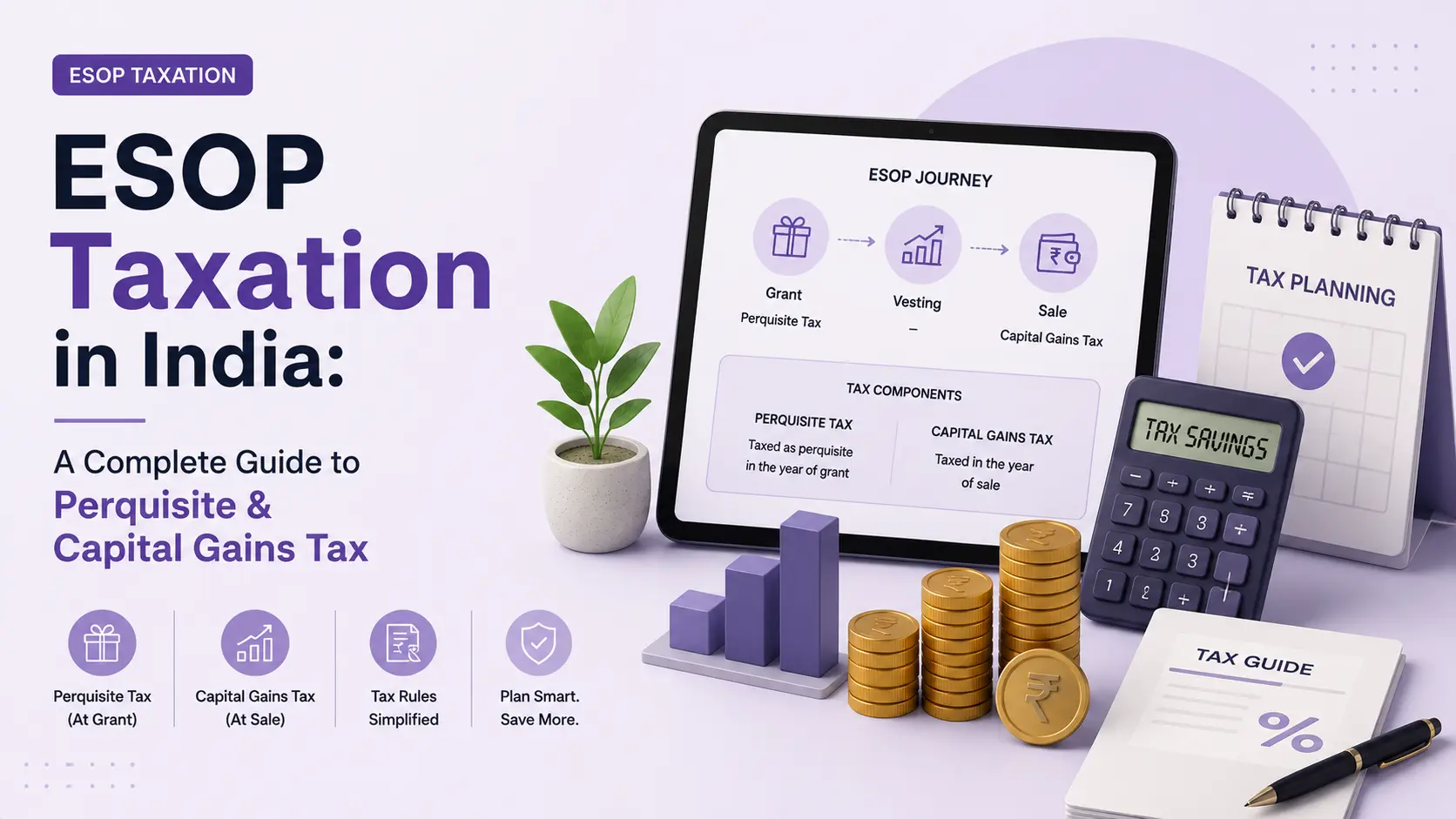
ESOP Taxation in India: A Complete Guide to Perquisite & Capital Gains Tax
Aug 7, 2026
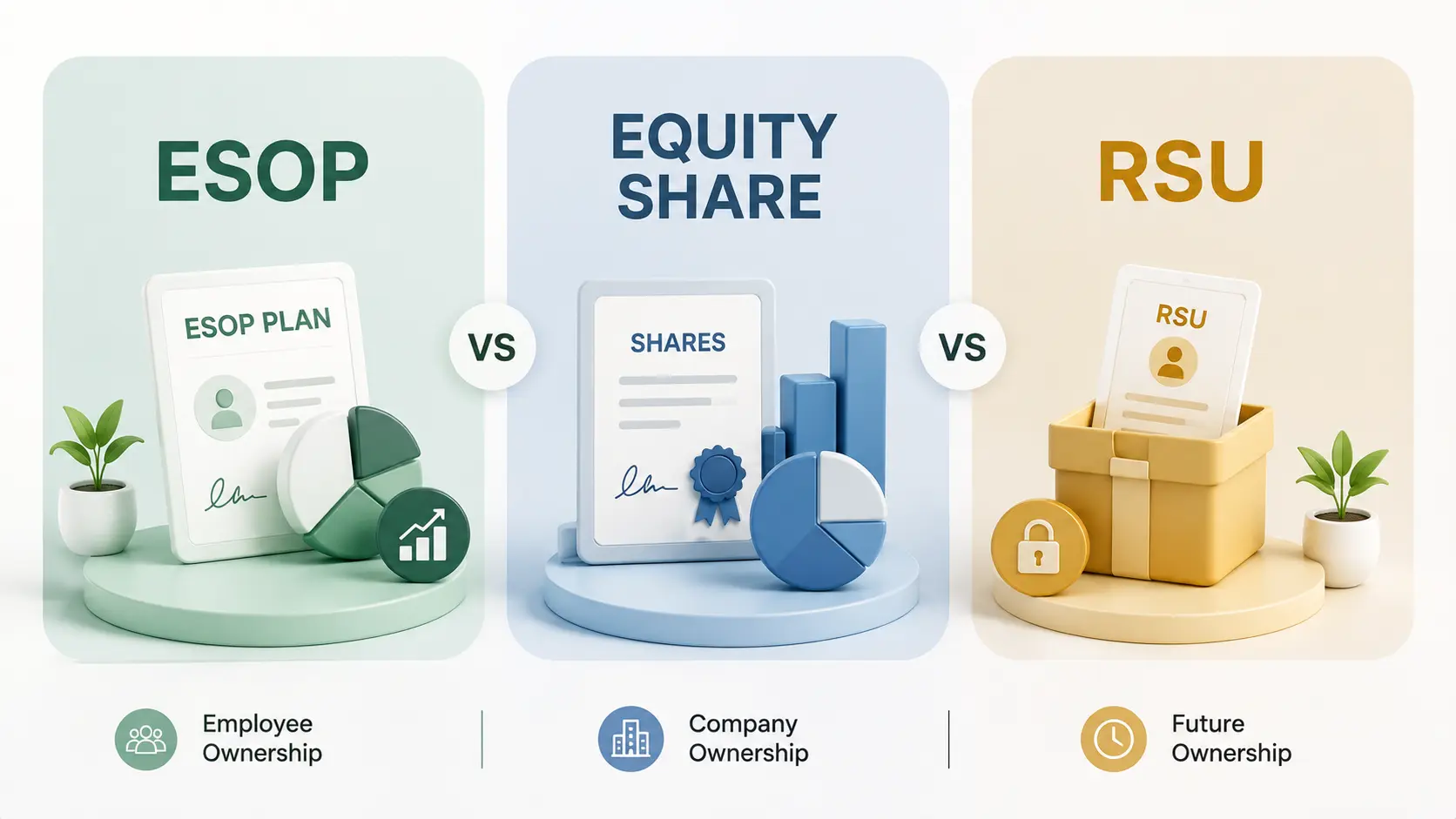
ESOP vs Equity Shares vs RSU: Understanding Employee Equity
Aug 11, 2026
ESOP vs ESPP: Which Employee Equity Plan is Better?
Aug 11, 2026
