How to Sell Unlisted ESOPs in India: Guide to Cashing Out Early

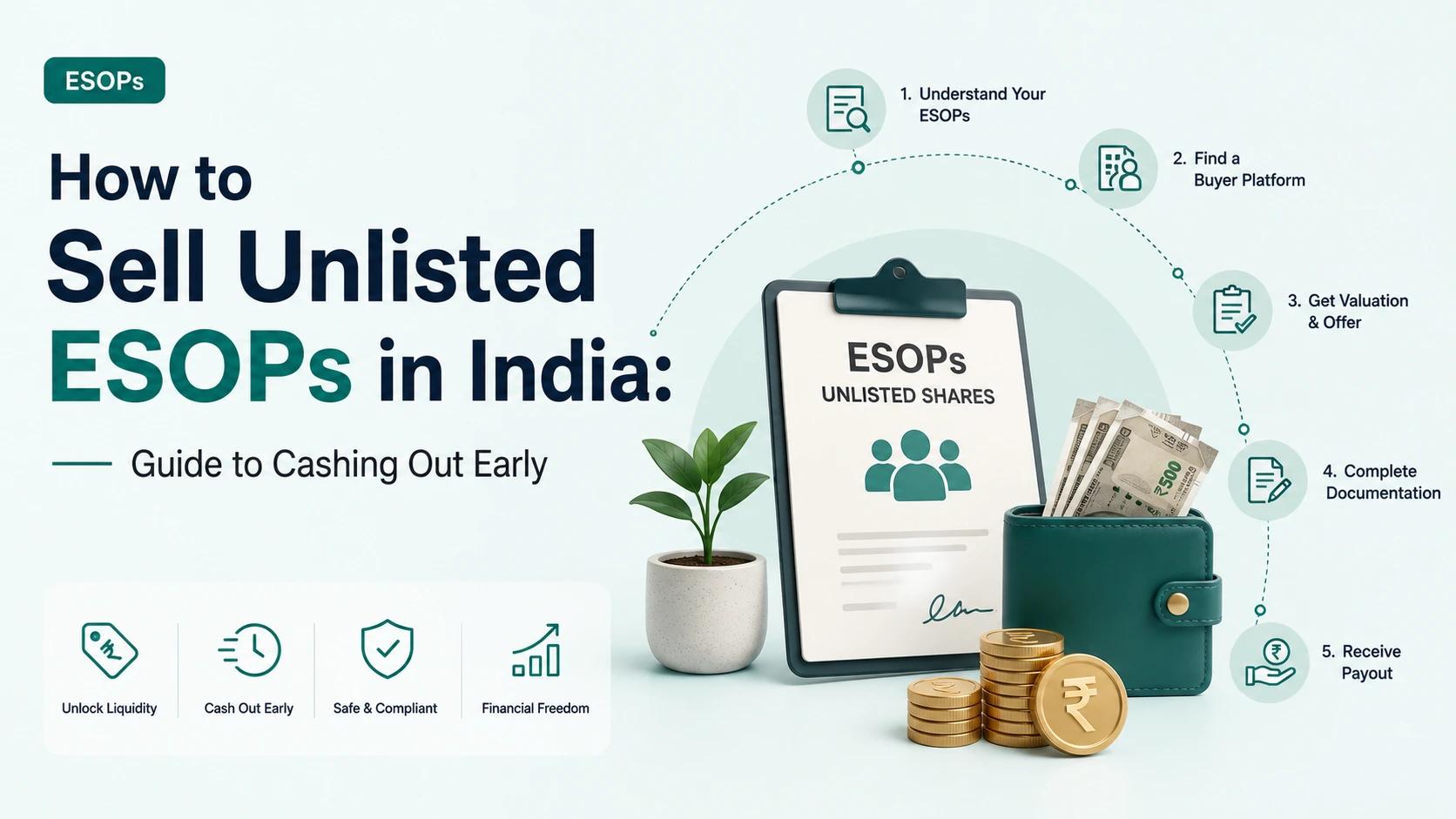
Table of Contents
Click to Expand
Your startup just closed a massive funding round. The valuation tripled. Your ESOP dashboard shows you are worth ₹5 Crores.
But you cannot touch a single rupee.
The company is not going public anytime soon. You are stuck holding illiquid paper while your real-life expenses pile up. This is the reality for thousands of Indian tech and startup employees.
You do not have to wait for an IPO. There is a legal way to extract cash out of your unlisted shares right now. It is called a secondary sale.
What is an ESOP Secondary Sale?
A secondary sale is exactly what it sounds like. You sell your vested ESOP shares to a third party.
Instead of waiting for the company to list on the stock exchange, you sell your shares to new investors entering the company or to existing shareholders. You get cash. They get equity. The company stays private.
If you need a refresher on which portion of your options you actually own and can sell, read our complete guide on What is ESOP to understand your vesting schedule.
Can You Legally Sell Unlisted Shares?
Yes. You are legally allowed to sell your vested ESOP shares in an unlisted company.
However, you do not have absolute freedom. Private companies have strict share transfer agreements.
Most Indian startups include a "Right of First Refusal" (ROFR) clause. This means you cannot just sell your shares to a random outsider. You must first offer the shares to the company itself, or to the existing investors. If they refuse to buy, you are free to sell to the new incoming investor.
How the Secondary Sale Process Works
This is not like selling a listed stock on Zerodha. It requires paperwork, approvals, and patience. Here is the standard timeline:
-
Check Your ESOP Pool
Not all ESOPs are transferable. You must read your grant letter. If your shares are in a specific "non-transferable" pool, you are out of luck until an IPO. -
Initiate the Sale
You usually cannot do this alone. You inform the company that you want to sell. Many mature startups facilitate "Tender Offers" in which an external VC seeks to buy shares directly from employees. -
Determine the Price (The Valuation Trap)
This is where employees lose the most money. The price you get is almost always lower than the headline valuation of the last funding round. Because unlisted shares are illiquid, buyers demand a discount. A 20% to 30% discount to the last funding price is standard. -
Company Board Approval
The company's board of directors must formally approve the transfer of shares from your name to the buyer's name. -
Payment and Transfer
Once approved, the buyer sends the money to your bank account. The company's legal team updates the cap table and issues new share certificates in the buyer's name.
Taxation on Unlisted ESOP Secondary Sales
The Indian government recently changed the tax rules. You need to know exactly how much you will owe before you sign the sale agreement.
As of mid-2024, the tax treatment for unlisted shares is straightforward:
- Flat Tax Rate: Regardless of how long you have held the shares, the profit you make on selling unlisted ESOPs is taxed at a flat 20%.
- No Indexation Benefit: You can no longer adjust the purchase price for inflation.
A quick example:
You exercise your options at ₹50. The company approves a secondary sale at ₹200. Your profit is ₹150 per share. Under the latest 2024 tax rules, you will pay a flat 20% tax on that ₹150 profit. Plan for this exact hit before you calculate how much cash you are actually walking away with.
The Liquidity Trap: What to Do With the Cash
Let's say you successfully sell your unlisted ESOPs. You clear the taxes. You have ₹2 Crores sitting in your savings account.
This is the most dangerous moment for an employee. Most people leave it in the bank while they "figure things out." Others dump it all into real estate. Both are massive mistakes. You just spent years taking concentrated risk in a startup. You need to institutionalize that wealth immediately.
Before you make a move, run a structural portfolio review. We will show you whether your existing investments are losing tax efficiency, and help you figure out exactly how to deploy this new cash.
The biggest mistake executives make with ESOP wealth is replacing one concentrated risk (the startup) with another concentrated risk (real estate).
If you are dealing with multi-crore ESOP payouts, standard mutual funds will not give you the focused risk management you need. Explore Portfolio Management Services in India to see how professional managers build concentrated, high-conviction portfolios to protect your liquidity event.
Conclusion / Final Thoughts
An IPO is not the only way to cash out your ESOPs.
Secondary sales are a standard part of the Indian startup ecosystem. They require navigating ROFR clauses, accepting valuation discounts, and paying the new flat 20% tax.
If you are stuck holding paper wealth in an unlisted company, start the conversation with your HR or finance team today. Find out if your ESOP pool allows secondary transfers. If it does, take control of your liquidity on your own terms.
Frequently Asked Questions
Can I sell my unlisted ESOPs before the company goes public?
Yes, provided your ESOP agreement allows it and the company's board approves the transfer. You usually sell them to new VC investors entering the company during a funding round.
Will I get the exact price of the last funding round?
Usually, no. Because unlisted shares are hard to sell, buyers demand a liquidity discount. Expect to sell your shares at a 20% to 30% discount to the last official valuation.
What is the Right of First Refusal (ROFR) in ESOPs?
It is a legal clause. If you find a buyer for your shares, you must offer the company or existing investors the chance to buy them at the same price first. If they pass, you can sell to your original buyer.
How are unlisted ESOPs taxed in India now?
The rules changed recently. The profit you make from selling unlisted ESOP shares is now taxed at a flat 20% rate, regardless of how long you have held them. Indexation benefits have been removed.
Do I need to pay tax when I buy the unlisted ESOPs, or only when I sell?
Both. You pay income tax (perquisite tax) when you exercise the options based on the Fair Market Value. Then you pay the 20% capital gains tax when you eventually sell the unlisted shares.
Disclaimer
Mutual fund investments are subject to market risks. Read all scheme-related documents carefully. Please consult a certified financial advisor before making any investment decisions.
Trust & Compliance
This article has been created following our strict Editorial Policy. We believe in complete transparency regarding how we operate; you can read our Disclosures. For legal liabilities and risk factors, please review our Disclaimer.
Share & Save Article
Other Posts
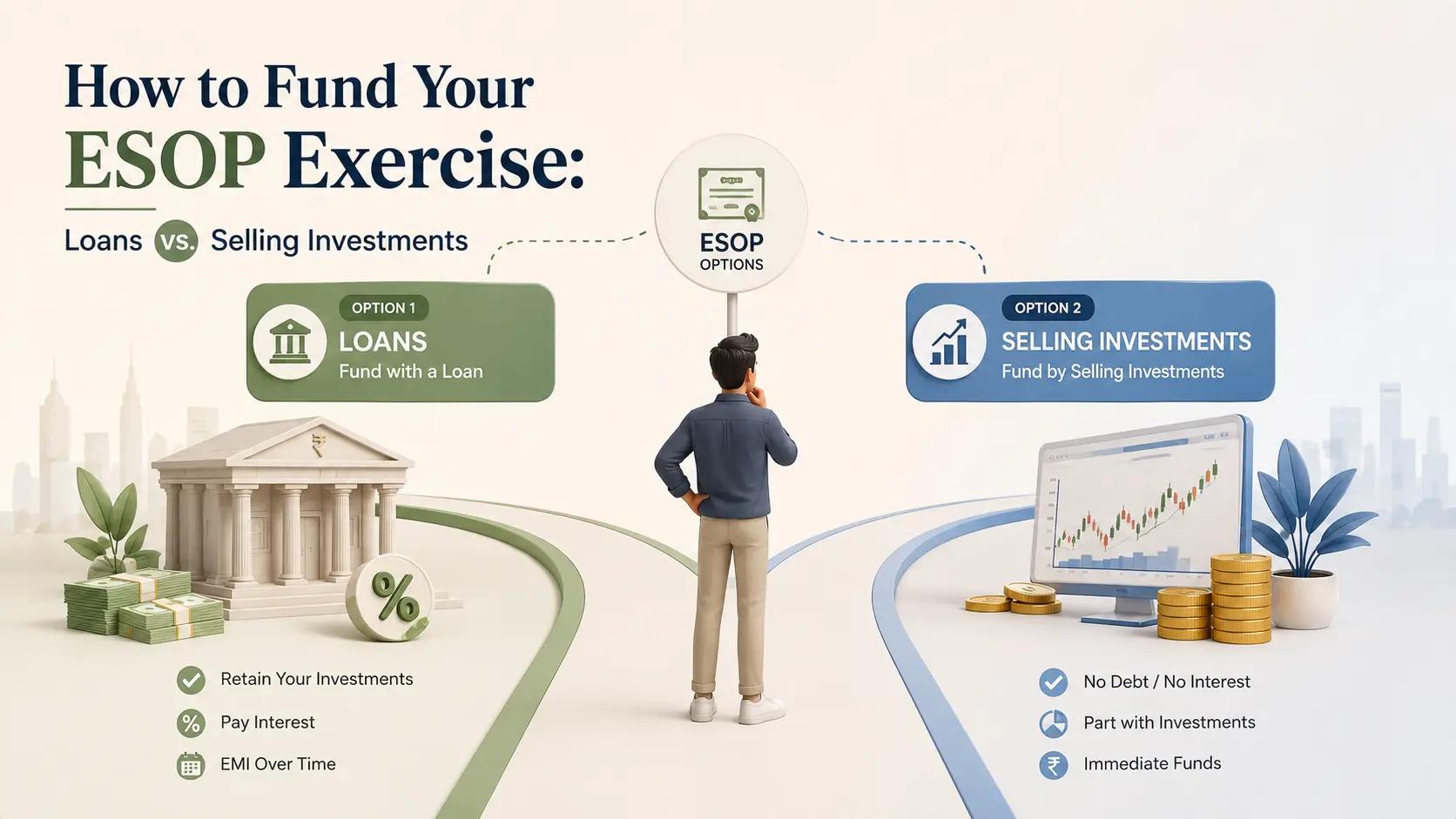
How to Fund Your ESOP Exercise: Loans vs. Selling Investments
Aug 11, 2026
Creating Wealth with ESOPs: Steps You Actually Need to Take
Aug 6, 2026
How to Check Income Tax Refund Status Online: A Complete Guide
Jul 18, 2026
Why is Income Tax Refund Delayed? A Complete Guide to Processing Times
Jul 18, 2026
